
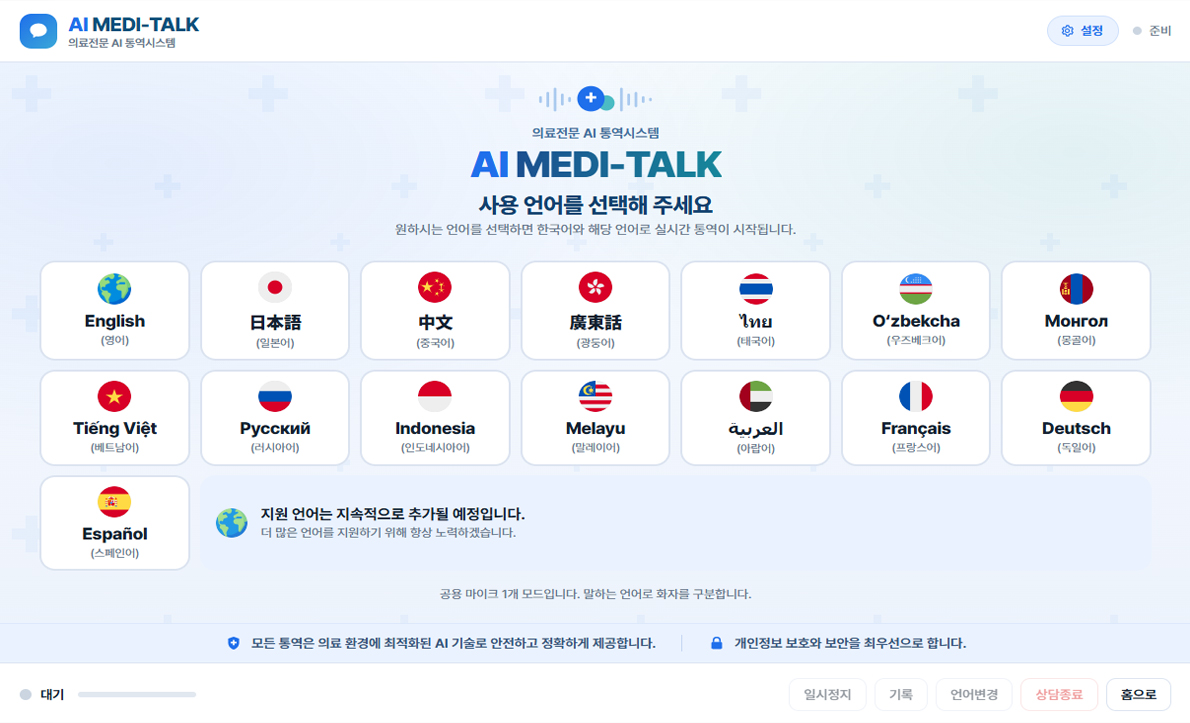
Real-time support for 15 languages
Supports English, Japanese, Chinese, Cantonese, Thai, Uzbek, Mongolian, Vietnamese, Russian, Indonesian, Malay, Arabic, French, German and Spanish, with more languages continuously being added.
Real-time AI interpretation connects people in taxis, hospitals, visitor services and customer consultations where communication must be immediate and clear. Original speech and translated text appear together on screen, while one- and two-microphone modes adapt the experience to each environment.
Supports English, Japanese, Chinese, Cantonese, Thai, Uzbek, Mongolian, Vietnamese, Russian, Indonesian, Malay, Arabic, French, German and Spanish, with more languages continuously being added.
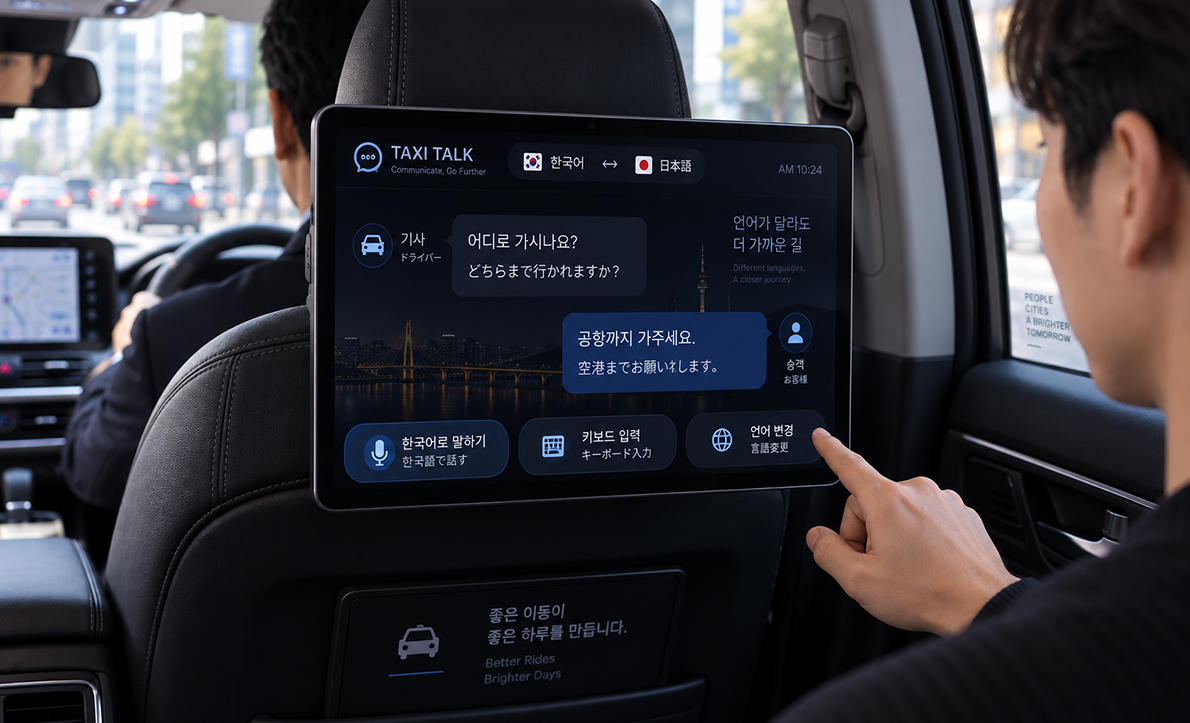
A shared microphone identifies speakers by the language they use, making the system easy to install in compact or mobile environments.
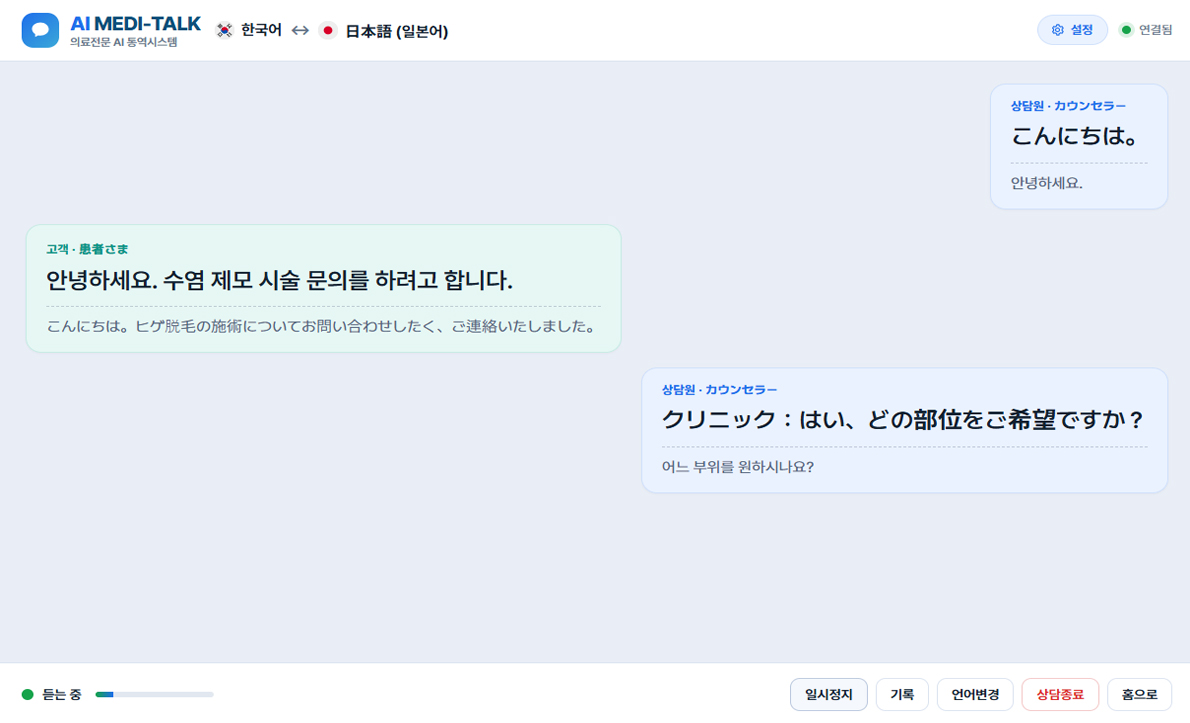
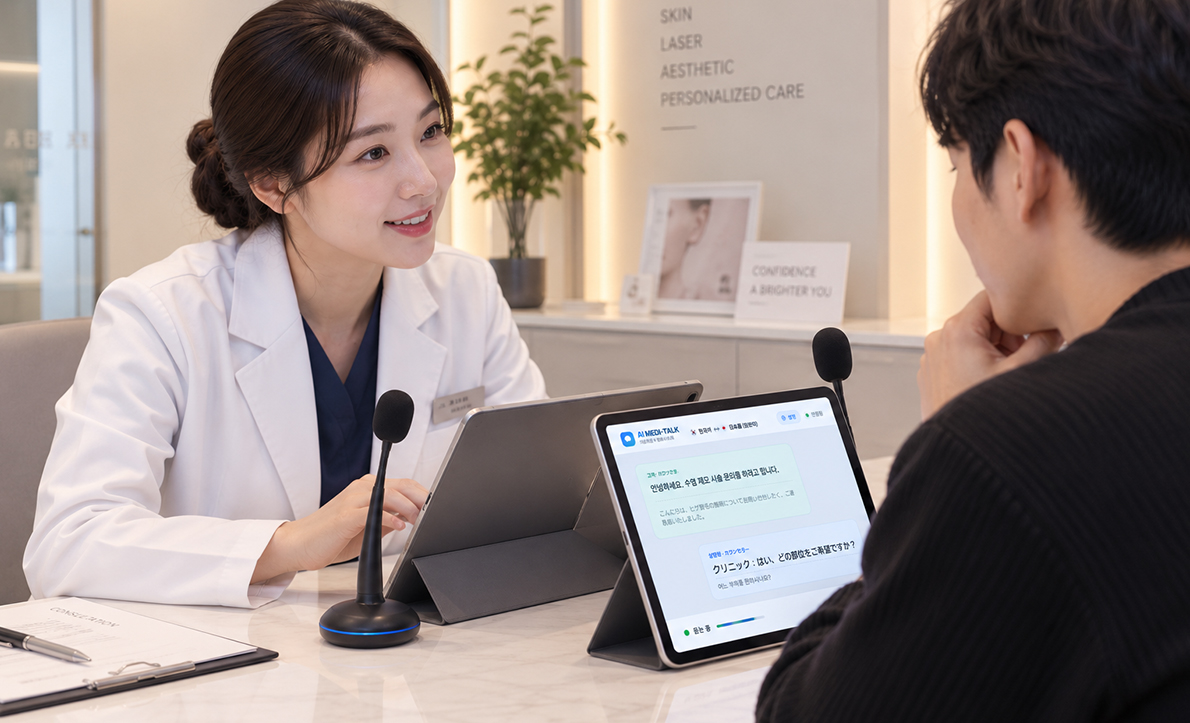
Separate microphones identify each participant by input device, ideal for reception desks and professional consultations with extended dialogue.
Each utterance is transcribed and displayed beside its translation so names, destinations and important details can be visually confirmed.
Configure languages and devices for driver-passenger conversations, medical reception and guidance, tourism, hospitality and public services.
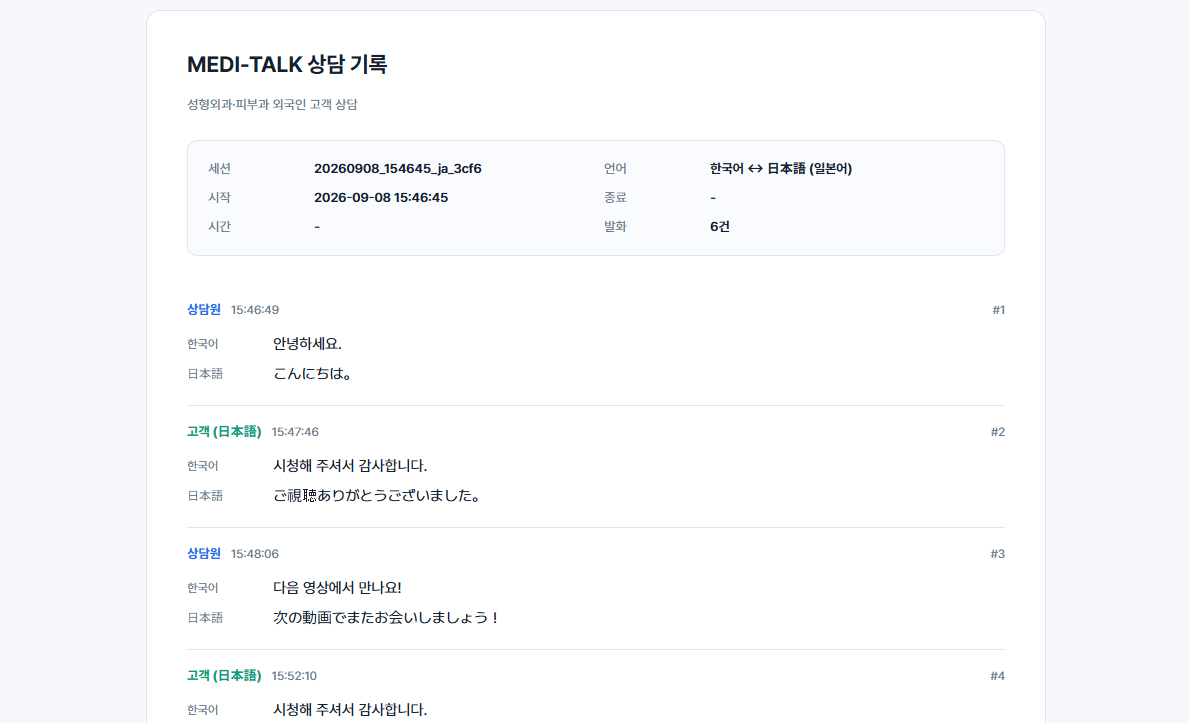
Review session languages, timestamps and utterances after a conversation for follow-up, handover and service-quality management.
Choose languages and a microphone mode, begin speaking naturally, and retain the completed session as a reviewable conversation record.
Choose the conversation languages and use one microphone with language-based speaker detection or two microphones with device-based detection.
Recognize each utterance, translate it into the other participant’s language and show the original and translated text together.
Save languages, timestamps and speaker-by-speaker dialogue so authorized users can return to the conversation when needed.
Flexible audio input and reviewable records support reliable multilingual service in both mobile environments and professional consultations.
Communicate destinations, routes and requests between drivers and passengers in their preferred languages.
Interpret reception, symptom descriptions and care guidance while keeping critical details visible on screen.
Improve access and service quality by responding to international visitors in a language they understand.
Use session history to confirm missed details and support necessary follow-up and service management.